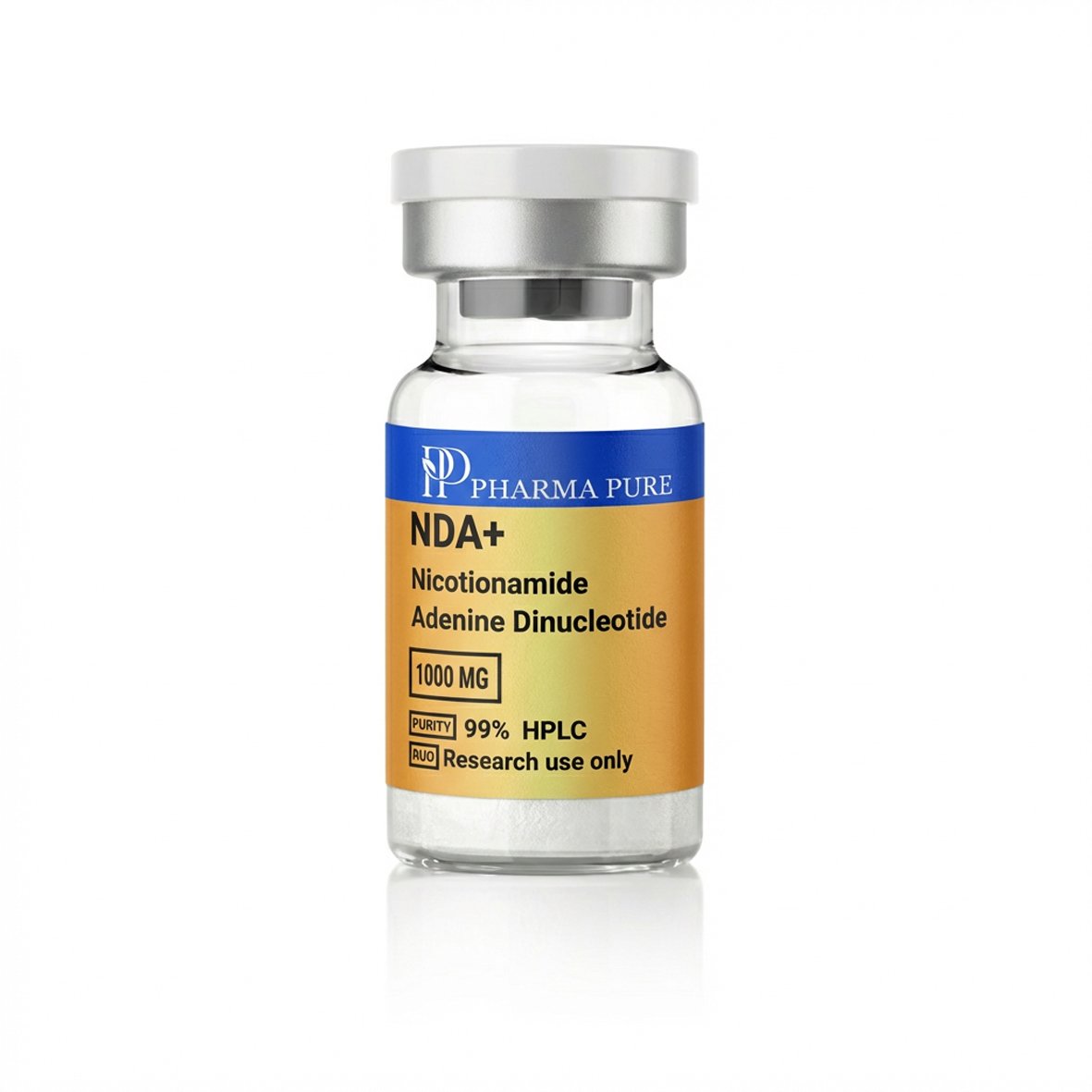
NAD+
1. Identity and Forms
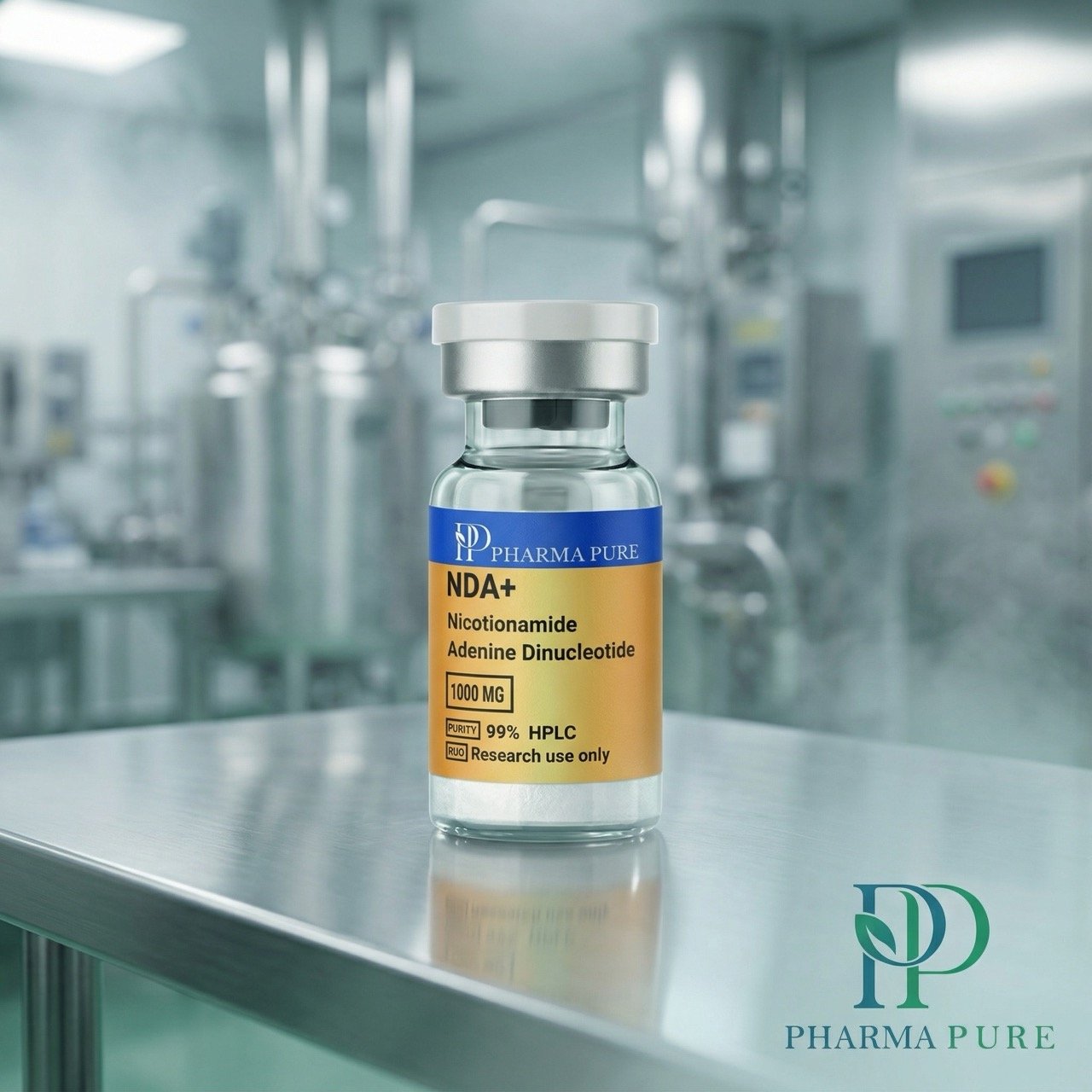
Nicotinamide Adenine Dinucleotide (NAD+) is an essential coenzyme found in all living cells. It is a fundamental molecule central to metabolism, energy production, and cellular signaling.
| Form | Function | Role |
|---|---|---|
| NAD+ (Oxidized Form) | Electron Acceptor | Used in catabolic pathways (breaking down molecules) and is a required substrate for crucial signaling enzymes. |
| NADH (Reduced Form) | Electron Donor | Used in anabolic pathways (building molecules) and is primarily funneled into the Electron Transport Chain (ETC) to produce ATP (cellular energy). |
The ratio of NAD+ to NADH (NAD+/NADH) is a critical indicator of the cell’s metabolic state and energy availability.
2. Fundamental Biological Role
NAD+ is often referred to as a “helper molecule” that facilitates hundreds of enzymatic reactions in the body. Its roles are broadly categorized as:
1. Redox Reactions (Energy Metabolism): NAD+ and NADH cycle constantly between oxidized and reduced states to transfer electrons. This process is essential for:
- Glycolysis: Converting glucose into pyruvate.
- The Krebs Cycle (Citric Acid Cycle): Generating high-energy electrons (as NADH) to power ATP synthesis.
- Electron Transport Chain (ETC): NADH is oxidized back to NAD+, releasing energy to generate the vast majority of cellular ATP.
2. Non-Redox Signaling: NAD+ acts as a substrate for a unique class of signaling enzymes that regulate gene expression, DNA repair, and cell survival.
3. Key NAD+-Dependent Signaling Pathways
The involvement of NAD+ in these specific pathways is the primary focus of current aging and metabolic research:
| Pathway | Function | Role of NAD+ |
|---|---|---|
| Sirtuins (SIRTs) | A family of seven NAD+-dependent enzymes that regulate metabolism, DNA repair, and stress resistance. | NAD+ is the required substrate for Sirtuins to function as deacetylases (removing acetyl groups from proteins). Sirtuins are inactive without NAD+. |
| PARPs | Enzymes crucial for DNA repair, particularly in response to damage (e.g., single-strand breaks). | NAD+ is consumed by PARPs, which utilize the NAD+ molecule to form poly-ADP-ribose chains to signal and recruit DNA repair proteins. |
| CD38/CD157 | Enzymes that regulate calcium signaling and are potent NAD+ glycohydrolases (enzymes that consume NAD+). | CD38 activity increases with age, contributing significantly to the age-related decline in NAD+ levels by breaking down the molecule. |
4. Research Focus: NAD+ and Aging
A central finding in aging research is that NAD+ levels decline significantly with age across many tissues. This decline is hypothesized to contribute to various age-related dysfunctions by impairing the activity of NAD+-dependent enzymes (SIRTs and PARPs).
Potential research areas related to boosting NAD+ levels include:
- Metabolic Syndrome: Improving insulin sensitivity and reducing lipid accumulation.
- Neuroprotection: Protecting neurons against degenerative diseases (e.g., Alzheimer’s and Parkinson’s) by enhancing mitochondrial function.
- Cardiovascular Health: Supporting endothelial function and reducing vascular aging markers.
- DNA Repair: Enhancing the cell’s ability to repair genetic damage, potentially reducing cancer risk.
5. NAD+ Precursors (Boosting NAD+ Levels)
Because the NAD+ molecule itself is poorly absorbed when taken orally, research focuses heavily on compounds known as precursors that the body can convert into NAD+:
- Nicotinamide Riboside (NR): A form of Vitamin B3 that is efficiently converted to NAD+ via the NR kinase pathway.
- Nicotinamide Mononucleotide (NMN): A metabolite produced from NR and is also a direct precursor to NAD+ (via an enzyme called NMNAT).
- Nicotinamide (NAM) and Nicotinic Acid (NA): Traditional forms of Vitamin B3 that also serve as NAD+ precursors, though their efficiency and mechanism differ from NR and NMN.