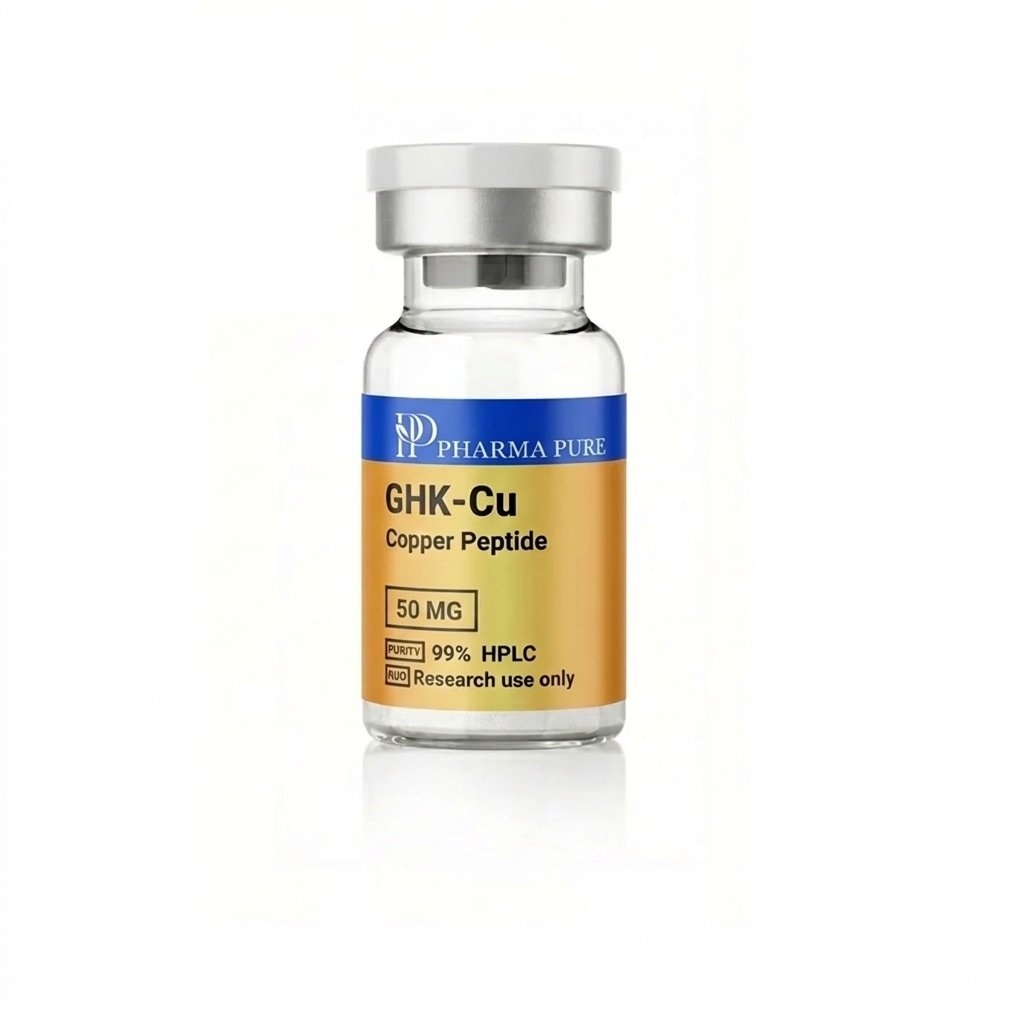
COSMETIC PEPTIDES: GHK-Cu
Available Formats: 1000mg | 200mg
Legal Notice Regarding This Product
THIS PRODUCT IS STRICTLY INTENDED FOR RESEARCH USE ONLY. It is designated solely as a research chemical. Usage is confined to in vitro testing and laboratory experimentation exclusively. Introducing this product into humans or animals by any route is strictly prohibited by law. Handling should be undertaken only by licensed, qualified professionals. This product is not to be used as a drug, food, or cosmetic.
1. 🧬 Signaling Molecule & Gene Modulation
GHK-Cu acts as a signaling molecule that influences the behavior of numerous cells in the skin and other tissues:
- Gene Reset: Influences the expression of over 4,000 human genes, “resetting” damaged cells to a state more typical of younger cells.
- Activation: Upregulates genes associated with tissue repair, regeneration, and antioxidant defense (e.g., DNA repair genes and SOD).
- Suppression: Downregulates genes linked to inflammation and tissue breakdown.
2. 🧪 Copper Delivery and Enzyme Cofactor
The tripeptide (GHK) has a high affinity for copper ions (Cu2+):
- Copper Carrier: Delivers essential copper ions directly into cells.
- Enzyme Activation: Acts as a cofactor for Lysyl Oxidase (cross-linking collagen/elastin) and Superoxide Dismutase (SOD) (neutralizing free radicals).
3. 🩹 Extracellular Matrix (ECM) Remodeling
- Synthesis: Stimulates fibroblasts to produce Collagen (Types I and III), Elastin, and Glycosaminoglycans (Hyaluronic Acid).
- Tissue Remodeling: Regulates Matrix Metalloproteinases (MMPs) to balance the breakdown of damaged collagen with new synthesis.
- Angiogenesis: Acts as a chemoattractant for immune and capillary cells, promoting new blood vessel formation.
Usage & Protocols
Topical Use Guidelines:
- Start Low: Test tolerance with concentrations below 0.5% for sensitive skin.
- Avoid Mixing: Do not apply with strong acids (AHAs/BHAs), high-strength retinoids, or Vitamin C.
Injectable (Subcutaneous) Dosage:
| Typical Dose | Concentration | Frequency |
|---|---|---|
| 2 mg | 10 mg/mL solution (0.2 mL) | 2 to 3 times per week |
| 5 mg | Varied | 2 to 3 times per week |
Storage (Reconstituted Solution)
| Requirement | Recommendation | Why? |
|---|---|---|
| Temperature | Refrigerator (2°C to 8°C) | Slows peptide degradation. Do not freeze. |
| Location | Back of the refrigerator | Prevents temperature fluctuations from the door. |
| Duration | 4 to 6 weeks | Efficacy is not guaranteed after this period. |