
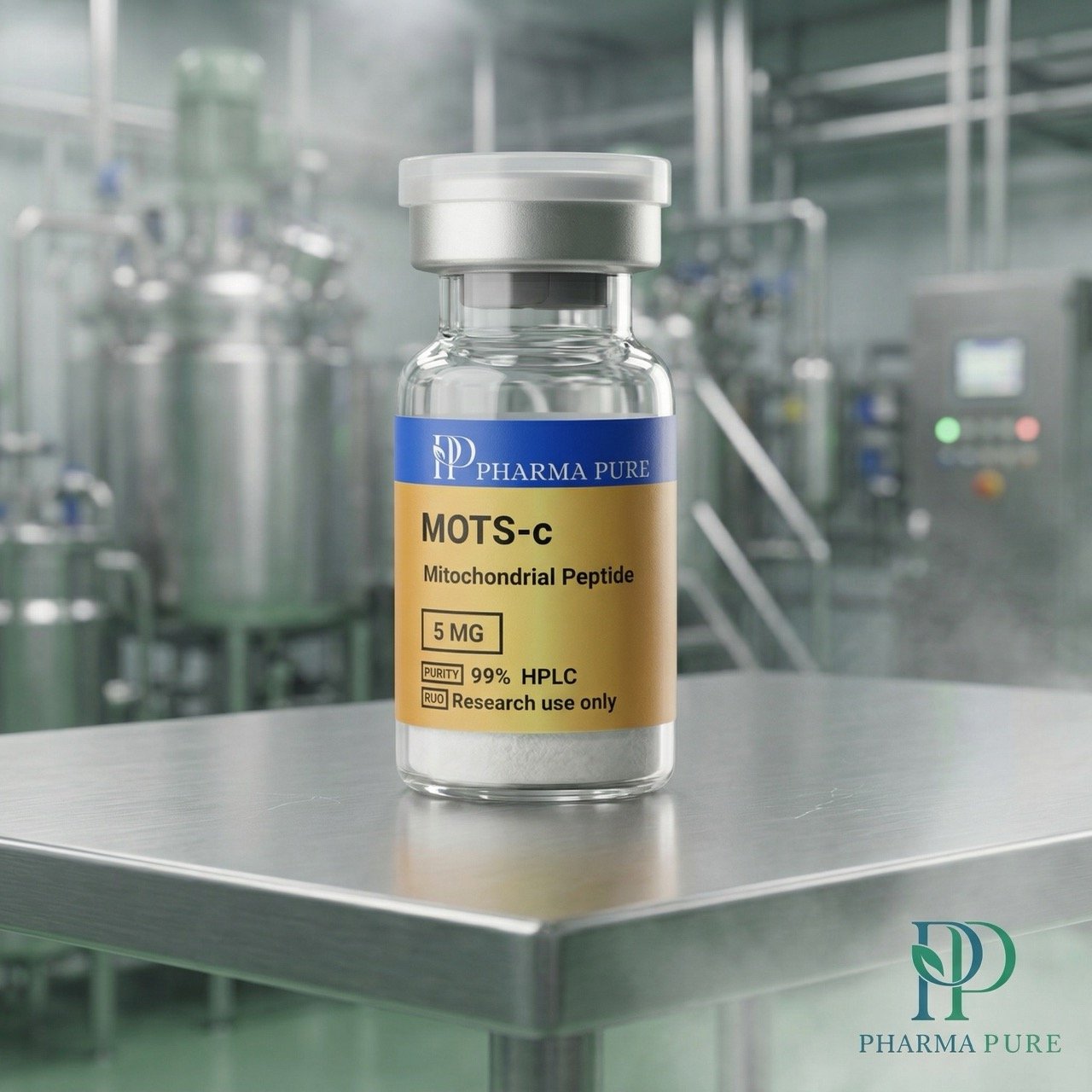
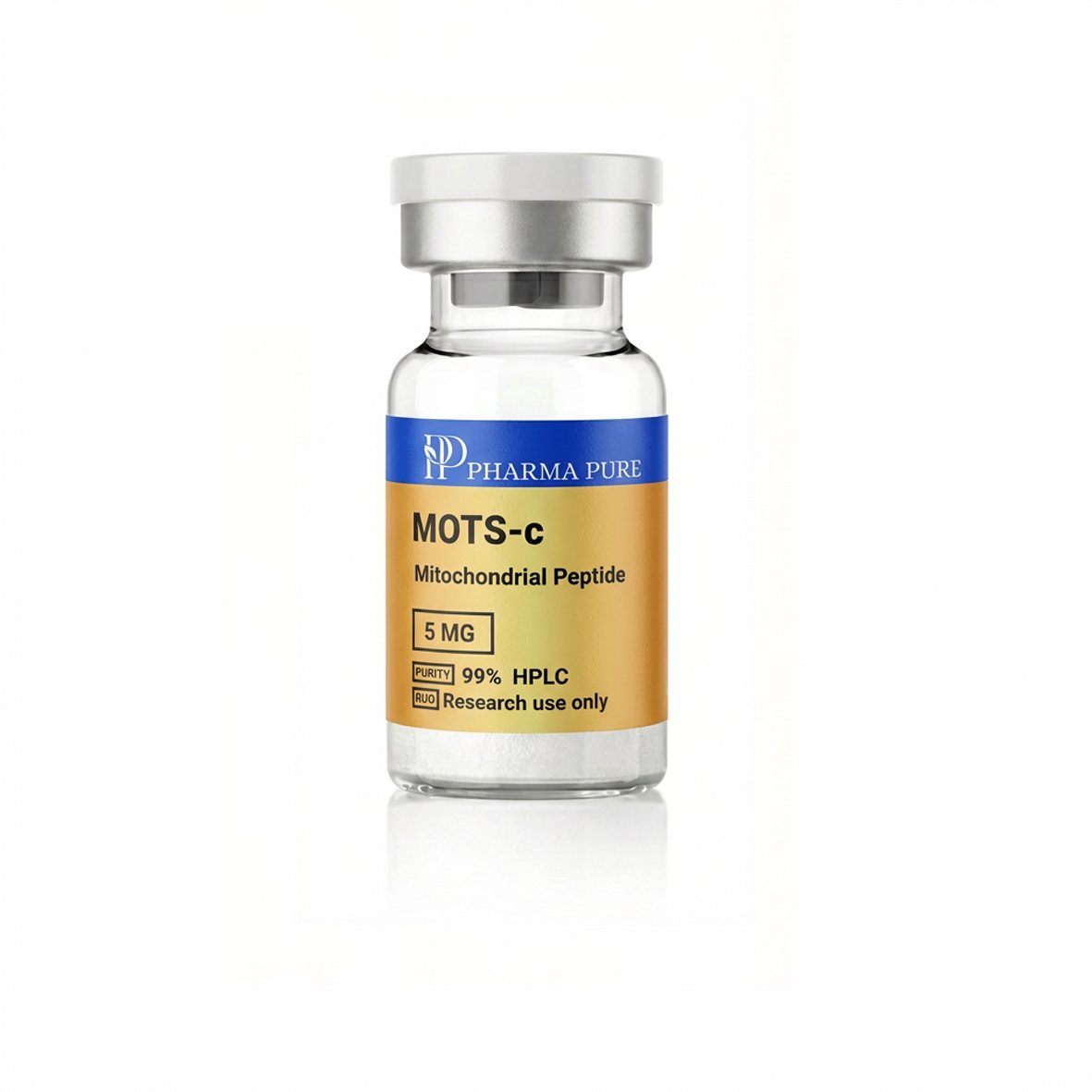
MOTS-c (Mitochondrial Open Reading Frame of the 12S rRNA-c)
MOTS-c is a small, 16-amino acid peptide. Its distinguishing feature is that it is encoded by the mitochondrial genome, rather than the nuclear DNA.
The mitochondria, often referred to as the cell’s “powerhouses,” produce this peptide. MOTS-c is believed to function as a retrograde signaling molecule, communicating information from the mitochondria to the rest of the cell, including the nucleus, to regulate key biological processes.
2. Mechanism of Action
The primary function of MOTS-c revolves around regulating cellular metabolism, particularly in skeletal muscle. Its main mechanism of action is linked to a crucial energy sensing pathway:
- AMPK Activation: MOTS-c is thought to activate the AMP-activated protein kinase (AMPK) signaling pathway. AMPK is often called the cell’s “master energy sensor.”
- Enhanced Glucose Uptake: The activation of AMPK by MOTS-c promotes the transport of glucose (sugar) into muscle cells for metabolism. This significantly improves insulin sensitivity and helps lower blood glucose levels.
- Increased Fat Oxidation: It stimulates the utilization of stored fat as an energy source rather than storage, aiding in the reduction of visceral fat and combating obesity.
- Exercise Mimetic: MOTS-c is often described as an “exercise mimetic” because it initiates molecular pathways similar to those activated during physical exertion, thus enhancing endurance and mitochondrial function.
- Metabolic Flexibility: It helps cells efficiently adapt to metabolic stress and maintain energy homeostasis.
3. Potential Research Benefits and Suggested Uses
Based on studies primarily conducted in animal models (rodents) and in vitro (laboratory) settings, MOTS-c is suggested to have the following potential therapeutic benefits:
| Potential Benefit | Description |
|---|---|
| Metabolic Health & Diabetes | Improves insulin sensitivity and helps control glucose levels, making it a potential target for treating Type 2 Diabetes and Insulin Resistance. |
| Obesity Management | Reduces fat gain, especially on a high-fat diet, by promoting fat oxidation. |
| Physical Performance | Increases mitochondrial efficiency and energy production capacity, enhancing muscle endurance and strength. |
| Anti-Aging & Healthspan | Linked to regulating mitochondrial health and protecting them from age-related damage, potentially slowing physical decline. |
| Neuroprotection | Preliminary research suggests a potential role in protecting neuronal cells from oxidative stress and improving cognitive function. |
4. Regulatory Status and Safety (Crucial Warning)
- Not Approved for Human Use: MOTS-c has not been approved by any major regulatory body (like the U.S. FDA or EMA) as a drug for treating human disease or as a dietary supplement. Its use is currently limited to research and preliminary clinical studies.
- Long-Term Safety Unknown: While some initial research may suggest good tolerability in controlled settings, the long-term safety profile and side effects for human use are not fully established.
- Risk: Due to the lack of regulatory oversight, products sold online under the name MOTS-c may be impure, mislabeled, or of inconsistent quality.
5. Dosage and Storage
As an unapproved research chemical, there are no standardized, medically approved, or safe human “dosages” or “storage guidelines.” However, in a research context:
- Research Dosing: In animal studies, it is typically administered via injection (subcutaneously or intraperitoneally), and research doses vary widely depending on the study’s objective.
- Storage (for Research Material): Peptides are generally delicate. If the peptide is in a lyophilized (freeze-dried) powder form, it must be stored in the refrigerator or freezer (2°C to 8°C or -20°C) to maintain stability. Once reconstituted with sterile water or bacteriostatic water, it should be stored in the refrigerator and used within a short period (typically a few weeks), protected from light.